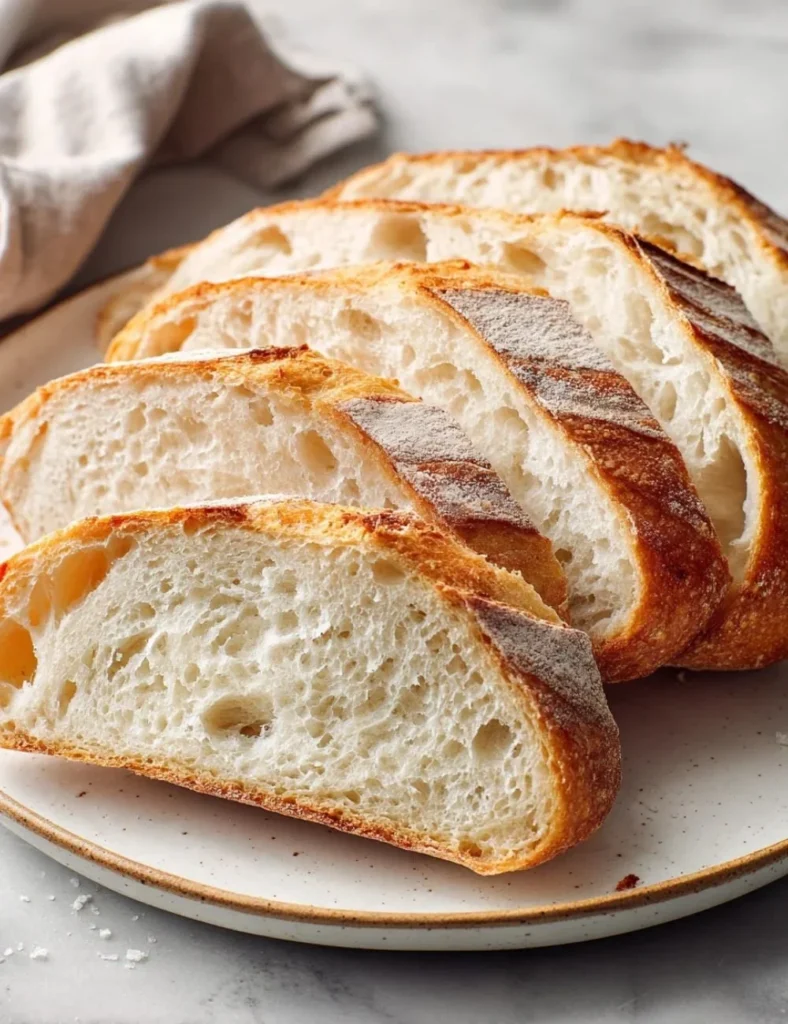
This no-knead artisan bread is simple and rewarding. It makes a crisp, golden crust and a soft, open crumb. The aroma of baked bread fills the kitchen. A little time and just four ingredients give you a rustic loaf that shines with butter or olive oil.
Recipe Information
- Prep Time: 13 hours
- Cook Time: 45 minutes
- Total Time: 13 hours 45 minutes
- Servings: 8 slices
- Difficulty Level: Easy
Nutrition Information
(approximate per serving)
- Calories per serving: 230 kcal
- Protein: 6 g
- Carbohydrates: 48 g
- Fat: 1 g
- Fiber: 2 g
- Sugar: 0.2 g
- Sodium: 575 mg
Why Make This Artisan Bread
This bread is low-effort and high-reward. You mix ingredients quickly, then let time do the work. The long, slow rise builds flavor without kneading. The crust becomes crackly and browned in a hot Dutch oven. The inside is soft, slightly chewy, and full of air pockets. It smells amazing as it bakes. Make it for sandwiches, soups, or a special weekend breakfast.
How to Make Artisan Bread
The method focuses on a wet dough and a long rise. You mix dry ingredients, add warm water, and let the dough ferment at room temperature for 12–18 hours. After shaping and a short rest, you bake the dough in a preheated Dutch oven. Heat and steam inside the pot create a crisp crust and tender crumb. The steps are simple and forgiving.
Ingredients:
500g all-purpose flour, 350ml warm water, 2 tsp salt, 1/2 tsp instant yeast
Directions:
Step 1: Preparation
In a large bowl, mix flour, salt, and yeast. Measure ingredients accurately. Use warm water (about 95–105°F / 35–40°C) to help the yeast wake up. The dough will be very wet and shaggy. Lightly oil the bowl so dough won’t stick too much.
Step 2: Mixing
Add warm water and stir until a wet dough forms. Use a wooden spoon or spatula to combine thoroughly. Cover the bowl with a damp cloth and let it rise for 12–18 hours at room temperature. The dough should double and show bubbles on the surface when ready.
Step 3: Cooking
After rising, turn the dough out onto a floured surface and shape it into a ball with gentle folding. Let it rest for 30 minutes while preheating the oven to 450°F (230°C). Place a Dutch oven (with lid) in the oven to heat up for at least 20–30 minutes. Carefully transfer the dough into the hot Dutch oven (use parchment if you prefer). Cover it, and bake for 30 minutes. Remove the lid and bake for an additional 15–20 minutes until the crust is deep golden brown.
Step 4: Finishing
Remove the bread from the oven and cool on a wire rack for at least 30 minutes before slicing. Cooling helps the crumb set and keeps the texture tender. Slice and enjoy the smell and crisp crackle of the crust.
How to Serve Artisan Bread
- Serve warm with butter, olive oil, or soft cheese.
- Use thick slices for sandwiches or panini.
- Tear into pieces for dipping in soups and stews.
- Toast slices and top with avocado or tomato for a quick meal.
The bread pairs well with mild cheeses, cured meats, or a drizzle of honey.
How to Store Artisan Bread
- Room temperature: Store in a paper bag or a bread box for 1–3 days. This keeps the crust crisp and the crumb soft.
- Freezing: Wrap whole loaf or slices tightly in plastic then foil. Freeze up to 3 months. Thaw at room temperature and reheat in the oven for a few minutes to refresh the crust.
- Avoid refrigeration — it speeds up staling and makes bread dry.
Expert Tips for Perfect Artisan Bread
- Use a digital scale for accurate flour measurement. Small changes affect hydration.
- Warm water should feel slightly warm on your wrist, not hot.
- The dough should be sticky and loose. Don’t add extra flour while mixing.
- If your kitchen is cool, let the dough rise a bit longer. Look for bubbles and volume, not time alone.
- Preheat the Dutch oven well. A hot pot creates steam and a better crust.
- Use parchment to transfer dough safely. It also helps prevent sticking.
- For a crisper crust, remove the lid for the last bake and let the loaf brown fully.
- Score the top with a sharp knife or lame for controlled expansion and a pretty pattern.
- To test doneness, tap the bottom of the loaf — it should sound hollow.
Delicious Variations
- Rosemary and Olive: Add 1–2 tbsp chopped rosemary and 1/4 cup chopped olives to the dough before the long rise.
- Garlic Herb: Fold in 1 tbsp garlic powder and 1 tbsp mixed dried herbs for savory flavor.
- Seeded Top: Brush the dough lightly with water and press sesame or sunflower seeds on top before baking.
- Whole Wheat Blend: Replace up to 150g of the all-purpose flour with whole wheat flour. Add a touch more water if needed.
- Cheese Swirl: Fold in grated hard cheese during shaping for a melty, savory loaf.
Frequently Asked Questions
Q: Can I shorten the rise time?
A: You can warm the dough to speed fermentation, but shorter times give less flavor and a denser crumb. Aim for at least 6–8 hours if pressed, but 12–18 hours gives the best taste and texture.
Q: Do I have to use a Dutch oven?
A: A Dutch oven gives the best steam and crust. If you don’t have one, use a heavy baking pan and place a small tray of hot water in the oven to add steam. Results may vary.
Q: My dough is too sticky to shape. What now?
A: Lightly flour your work surface and your hands. Use a bench scraper to help turn and fold the dough. A sticky dough is normal for this recipe and leads to an open crumb.
Q: Why is my bread dense inside?
A: Dense crumb can come from too short a rise, old yeast, or over-handling the dough. Make sure the dough shows bubbles and volume before shaping and handle it gently.
Q: Can I add mix-ins like nuts or dried fruit?
A: Yes. Fold in 1/2 to 1 cup of mix-ins during shaping. Keep pieces small and evenly distributed to prevent large tears in the dough.
Q: How do I get a shinier crust?
A: Brush the top lightly with water or a thin egg wash before baking. Be careful — egg wash gives a deeper color, while water keeps it crisp.
Q: Is this recipe suitable for sourdough starter?
A: You can adapt this method to a sourdough starter, but you must replace yeast and adjust times. Longer fermentation and different hydration may be needed.
Conclusion
This artisan bread recipe proves that great bread does not require nuts-and-bolts techniques. With simple ingredients and time, you get a loaf with a crackly crust and soft, flavorful crumb. If you want extra ideas and techniques for no-knead and quick artisan loaves, check out Artisan Bread in Five Minutes a Day for more inspiration and baking tips. Give this loaf a try — the warm smell and fresh slices are worth the wait.
No-Knead Artisan Bread
- Total Time: 825 minutes
- Yield: 8 slices 1x
- Diet: Vegetarian
Description
This no-knead artisan bread features a crisp, golden crust and a soft, open crumb, making it perfect for sandwiches or as a side to soups.
Ingredients
- 500g all-purpose flour
- 350ml warm water
- 2 tsp salt
- 1/2 tsp instant yeast
Instructions
- In a large bowl, mix flour, salt, and yeast. Lightly oil the bowl.
- Add warm water and stir until a wet dough forms. Cover with a damp cloth and let rise for 12–18 hours at room temperature.
- Turn the dough out onto a floured surface, shape it into a ball, and let it rest for 30 minutes. Preheat the oven to 450°F (230°C) with a Dutch oven inside.
- Transfer the dough into the hot Dutch oven, cover it, and bake for 30 minutes. Remove the lid and bake for an additional 15–20 minutes until the crust is deep golden brown.
- Remove from the oven and cool on a wire rack for at least 30 minutes before slicing.
Notes
For variations, try adding herbs, cheese, or seeds to the dough before baking. Store at room temperature or freeze for longer storage.
- Prep Time: 825 minutes
- Cook Time: 45 minutes
- Category: Bread
- Method: Baking
- Cuisine: French
Nutrition
- Serving Size: 1 slice
- Calories: 230
- Sugar: 0.2g
- Sodium: 575mg
- Fat: 1g
- Saturated Fat: 0g
- Unsaturated Fat: 0g
- Trans Fat: 0g
- Carbohydrates: 48g
- Fiber: 2g
- Protein: 6g
- Cholesterol: 0mg