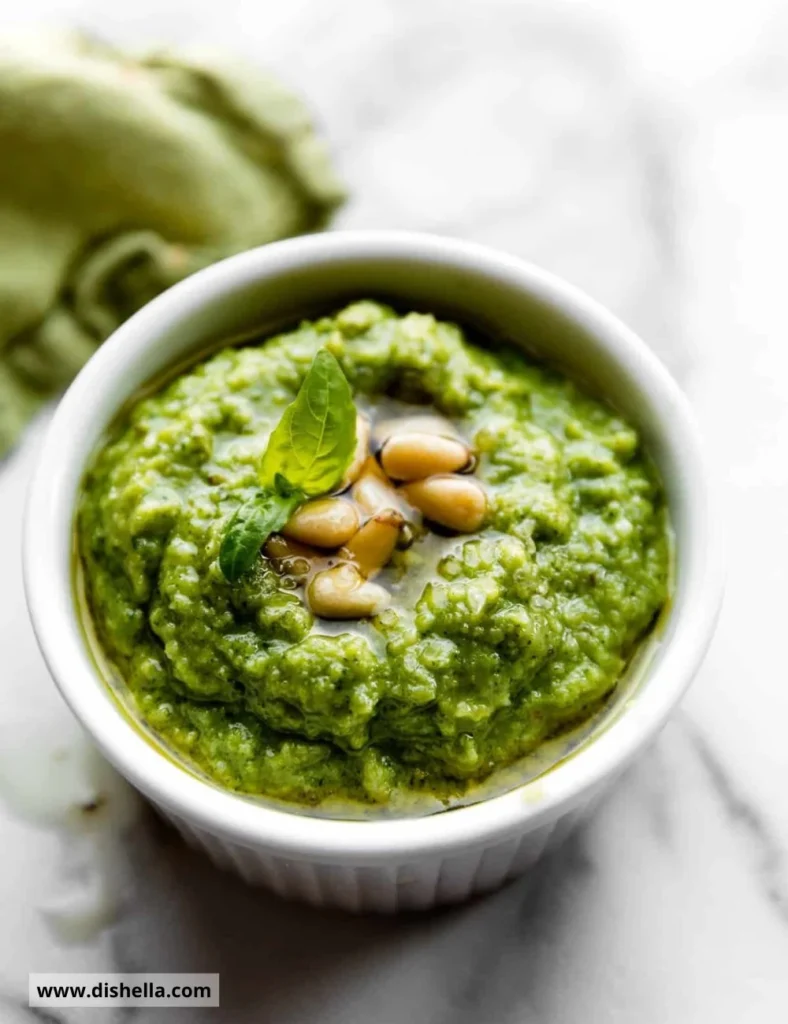
Homemade Basil Pesto is a fresh and flavorful sauce that brings the taste of summer right to your kitchen. This simple recipe uses vibrant basil leaves, savory Parmesan cheese, and rich olive oil to create a versatile sauce that’s perfect for pasta, sandwiches, or dipping fresh vegetables. Making your own pesto is not only easy but also allows you to control the ingredients, ensuring a vibrant and delicious result every time.
Recipe Information
- Prep Time: 10 minutes
- Cook Time: 0 minutes
- Total Time: 10 minutes
- Servings: 4
- Difficulty Level: Easy
Nutrition Information
- Calories per serving: 300
- Protein: 7 grams
- Carbohydrates: 3 grams
- Fat: 30 grams
- Fiber: 1 gram
- Sugar: 0 grams
- Sodium: 150 mg
Why Make This Homemade Basil Pesto
Making your own basil pesto at home is not just satisfying but also a great way to use fresh, high-quality ingredients. Homemade pesto is far superior to store-bought versions that often contain preservatives and artificial flavors. Plus, you can customize the flavor by adjusting the amount of garlic or even experimenting with different nuts. The fresh aroma of basil and garlic fills your kitchen, and the vibrant green color of the sauce is visually appealing. It’s a wonderful addition to any dish, adding a burst of flavor and nutrition.
How to Make Homemade Basil Pesto
Ingredients:
- 2 cups fresh basil leaves
- 1/2 cup grated Parmesan cheese
- 1/2 cup olive oil
- 1/3 cup pine nuts
- 3 garlic cloves
- Salt to taste
- Pepper to taste
Directions:
-
Step 1: Preparation
In a food processor, combine the basil leaves, pine nuts, and garlic. Pulse until coarsely chopped.
-
Step 2: Mixing
Add the Parmesan cheese and pulse again until combined.
-
Step 3: Blending
While the food processor is running, slowly pour in the olive oil until the mixture is smooth.
-
Step 4: Finishing
Season with salt and pepper to taste. Serve immediately or store in an airtight container in the refrigerator.
How to Serve Homemade Basil Pesto
Homemade basil pesto is incredibly versatile! Use it as a sauce for spaghetti or any pasta of your choice for an easy dinner. Spread it on toasted bread for a delightful appetizer or mix it into your favorite salad for extra flavor. It’s also great as a dip for fresh vegetables or chips. For a simple yet elegant dish, toss cooked chicken or fish with pesto right before serving.
How to Store Homemade Basil Pesto
To store basil pesto, transfer it to an airtight container. Cover the surface with a thin layer of olive oil before sealing to help prevent browning. Properly stored, it will keep in the refrigerator for up to one week. You can also freeze pesto in ice cube trays for easy portioning. Once frozen, transfer the cubes to a zip-top bag, where they can last for up to six months.
Expert Tips for Perfect Homemade Basil Pesto
- Use fresh basil for the best flavor; avoid wilted or brown leaves.
- Toasting the pine nuts lightly enhances their flavor; just be careful not to burn them.
- Experiment with other nuts like walnuts or almonds for a different flavor profile.
- For a dairy-free version, substitute nutritional yeast for cheese.
- If you prefer a thinner pesto, add more olive oil until you reach your desired consistency.
Delicious Variations
- Nut-Free Pesto: Omit the pine nuts and substitute sunflower seeds for a nut-free version.
- Vegan Pesto: Replace Parmesan with nutritional yeast and a bit of lemon juice for a balanced flavor.
- Spicy Pesto: Add a pinch of red pepper flakes for a kick of heat.
- Greens-Packed Pesto: Incorporate spinach or kale along with the basil for added nutrients and a different taste.
Frequently Asked Questions
- Can I use dried basil instead of fresh?
It’s best to use fresh basil because dried basil lacks the vibrant flavor and aroma. If necessary, use only a fraction of the amount, as dried herbs are much more concentrated. - Is there a substitute for pine nuts?
Yes, walnuts, pumpkin seeds, or sunflower seeds can work as substitutes if pine nuts are not available. - How long does homemade basil pesto last?
When stored properly in an airtight container, it can last up to a week in the refrigerator and up to six months in the freezer. - Why does my pesto turn brown in the fridge?
Exposure to air can cause pesto to oxidize and turn brown. Covering it with a layer of olive oil or transferring it to a container with minimal air can help maintain its color. - Can I make pesto without a food processor?
Yes! You can use a mortar and pestle to crush the ingredients together, though it may take more time and effort.
Conclusion
Crafting your own Homemade Basil Pesto is a rewarding endeavor that allows you to embrace fresh flavors and healthy ingredients. This delightful sauce enhances a variety of dishes, transforming simple meals into gourmet experiences. Whether you’re coating pasta, topping grilled meats, or spreading it on bread, each bite will give you a taste of delightful freshness. So, gather your ingredients and enjoy making this classic sauce – your taste buds will thank you!
Print
Homemade Basil Pesto
- Total Time: 10 minutes
- Yield: 4 servings 1x
- Diet: Vegetarian
Description
A fresh and flavorful sauce made with vibrant basil leaves, Parmesan cheese, and olive oil, perfect for pasta, sandwiches, or dipping vegetables.
Ingredients
- 2 cups fresh basil leaves
- 1/2 cup grated Parmesan cheese
- 1/2 cup olive oil
- 1/3 cup pine nuts
- 3 garlic cloves
- Salt to taste
- Pepper to taste
Instructions
- In a food processor, combine the basil leaves, pine nuts, and garlic. Pulse until coarsely chopped.
- Add the Parmesan cheese and pulse again until combined.
- While the food processor is running, slowly pour in the olive oil until the mixture is smooth.
- Season with salt and pepper to taste. Serve immediately or store in an airtight container in the refrigerator.
Notes
Store in an airtight container with a thin layer of olive oil on top to prevent browning. Can be frozen for up to six months.
- Prep Time: 10 minutes
- Cook Time: 0 minutes
- Category: Condiment
- Method: Blending
- Cuisine: Italian
Nutrition
- Serving Size: 1 serving
- Calories: 300
- Sugar: 0g
- Sodium: 150mg
- Fat: 30g
- Saturated Fat: 5g
- Unsaturated Fat: 25g
- Trans Fat: 0g
- Carbohydrates: 3g
- Fiber: 1g
- Protein: 7g
- Cholesterol: 15mg