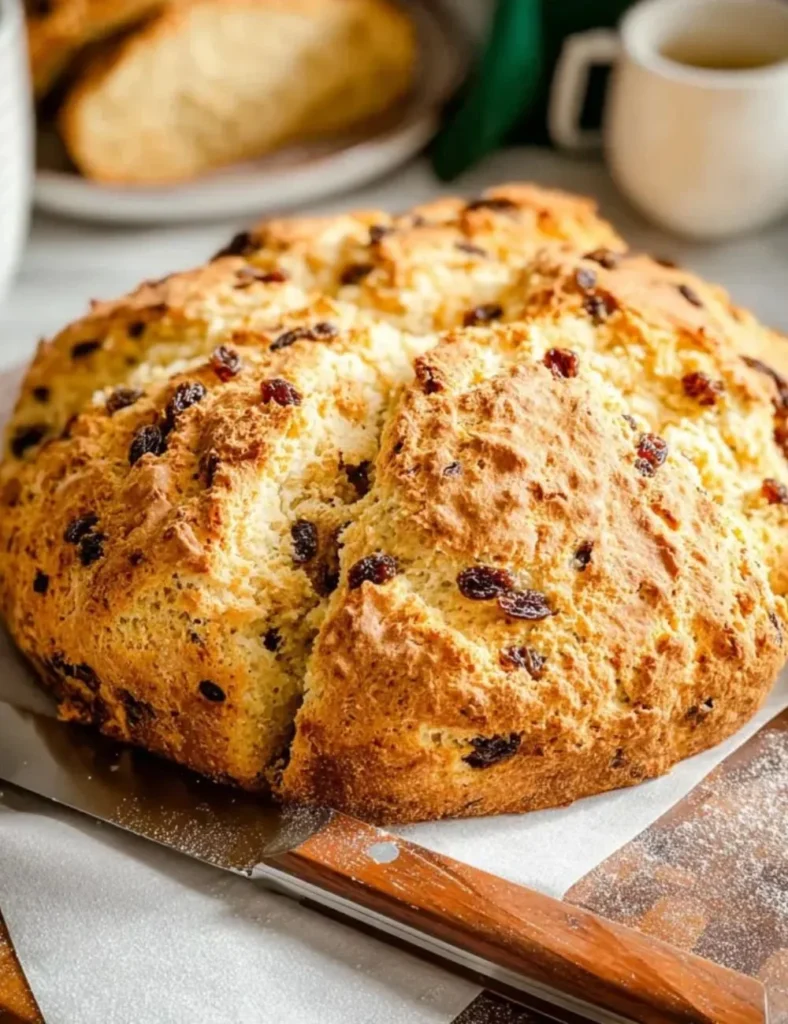
This St Patrick’s Day Irish Soda Bread is a quick, rustic loaf with a crisp golden crust and a dense, tender crumb. It smells of warm toasted flour and a hint of tang from the buttermilk. Ready in under an hour, this bread is simple to mix and bakes into a round loaf with a traditional cross on top. It’s perfect for a cozy holiday table or a weeknight side.
Try this ultra moist vanilla pudding pumpkin bread if you like easy quick-bread recipes with big flavor.
Recipe Information
- Prep Time: 15 minutes
- Cook Time: 35 minutes
- Total Time: 50 minutes
- Servings: 8 slices
- Difficulty Level: Easy
Nutrition Information
(The values are approximate per serving; this recipe makes about 8 servings.)
- Calories per serving: 240 kcal
- Protein: 8 g
- Carbohydrates: 48 g
- Fat: 1.5 g
- Fiber: 2 g
- Sugar: 3 g
- Sodium: 480 mg
Why Make This St Patrick’s Day Irish Soda Bread
This soda bread is fast, reliable, and full of Irish charm. It does not require yeast or rising time, so you can mix and bake it the same day. The crust becomes golden and slightly crisp, while the inside stays moist and slightly crumbly. The tang of buttermilk brightens the flavor and pairs beautifully with butter, jam, or savory toppings. It’s perfect for St. Patrick’s Day but also great for any meal when you want warm, homemade bread with minimal fuss.
How to Make St Patrick’s Day Irish Soda Bread
This recipe follows a classic method: combine dry ingredients, add buttermilk, shape gently, score the top, and bake. The key is not to overwork the dough so the loaf stays tender. Work quickly, keep the dough a bit sticky, and give it only a brief knead.
Ingredients:
- 4 cups all-purpose flour
- 1 teaspoon baking soda
- 1 teaspoon salt
- 1 3/4 cups buttermilk
Directions:
Step 1: Preparation
Preheat your oven to 425°F (220°C). Line a baking sheet with parchment paper or lightly grease it so the bread won’t stick.
Step 2: Mixing
In a large bowl, mix the flour, baking soda, and salt together. Make a well in the center and pour in the buttermilk. Stir until the dough comes together; it will be sticky. Use a wooden spoon or a sturdy spatula and scrape the sides of the bowl as you mix.
Step 3: Cooking
Turn the dough onto a floured surface and gently knead it for about 1 minute — just enough to bring it into a rough ball. Shape the dough into a round loaf and place it on the prepared baking sheet. Cut a deep cross in the top of the dough with a sharp knife; this helps the loaf bake evenly. Bake for 30-35 minutes or until the bread sounds hollow when tapped on the bottom and the crust is a deep golden brown.
Step 4: Finishing
Cool on a wire rack before slicing. Let the loaf rest at least 15 minutes so the crumb sets and the interior finishes cooking. Slice with a serrated knife for the cleanest cuts.
How to Serve St Patrick’s Day Irish Soda Bread
Serve warm with salted butter for a simple treat. For a heartier option, pair slices with Irish stew, corned beef and cabbage, or creamy soups. Try toasted slices with jam or honey for breakfast. The bread’s mild, tangy flavor complements both sweet and savory toppings.
How to Store St Patrick’s Day Irish Soda Bread
- At room temperature: Wrap the cooled loaf in a clean tea towel or place it in a paper bag for up to 2 days to keep the crust from getting soggy.
- In the refrigerator: Store in an airtight container for up to 5 days; set out at room temperature or toast before serving.
- In the freezer: Slice the loaf, wrap individual slices in plastic wrap and place them in a freezer bag. Freeze for up to 3 months. Thaw slices at room temperature or toast from frozen.
Expert Tips for Perfect St Patrick’s Day Irish Soda Bread
- Use cold buttermilk for the best rise and tang.
- Do not over-knead: too much kneading makes the bread tough. One minute of gentle kneading is enough.
- If dough is too dry, add 1 tablespoon more buttermilk at a time until it comes together. If too wet, dust with a little flour.
- Score a deep cross on top so steam can escape and the loaf bakes evenly.
- Check doneness by tapping the bottom — it should sound hollow. A thermometer inserted into the center should read about 200–205°F (93–96°C).
Delicious Variations
- Raisin and sugar: Add 1 cup of raisins and 2 tablespoons of sugar for a sweeter loaf.
- Caraway seed: Stir in 1–2 teaspoons of caraway seeds for a classic Irish flavor.
- Cheddar and chive: Fold in 1 cup grated sharp cheddar and 2 tablespoons chopped chives for a savory twist.
- Whole wheat: Replace up to half the flour with whole wheat flour for nuttier flavor and more fiber (expect a denser loaf).
- Honey and oats: Add 2 tablespoons honey and 1/2 cup rolled oats on top before baking for a rustic touch.
Frequently Asked Questions
Q: My bread is dense. What did I do wrong?
A: Dense soda bread usually means the dough was overworked or the baking soda is old. Knead very briefly and gently. Check that your baking soda is fresh — if it’s weak, the loaf won’t rise properly.
Q: Can I use baking powder instead of baking soda?
A: Baking soda needs an acid (buttermilk) to react. Baking powder contains its own acid and can work, but the texture and flavor will differ. If you use baking powder, use about 2 teaspoons and the bread may be lighter but less tangy.
Q: I don’t have buttermilk. What is a substitute?
A: Mix 1 tablespoon lemon juice or white vinegar with 1 3/4 cups milk and let sit 5 minutes. This makes a quick buttermilk substitute. Plain yogurt thinned with a bit of milk also works.
Q: Why is there a cross on top of soda bread?
A: Traditionally, the cross helps the loaf bake through and may have had cultural or symbolic meanings. Practically, it lets steam escape and helps even baking.
Q: How can I tell when the bread is done?
A: Tap the bottom — it should sound hollow. The crust should be deep golden. Internal temperature should read about 200–205°F (93–96°C).
Q: Can I freeze the baked loaf?
A: Yes. Wrap slices tightly in plastic and place in a freezer bag for up to 3 months. Toast or warm slices straight from the freezer.
Conclusion
This St Patrick’s Day Irish Soda Bread is quick, comforting, and full of homey flavor. It browns to a crisp crust and yields a tender, slightly tangy interior that goes well with butter, soups, or hearty mains. For another classic take on Irish soda bread, see Grandma’s Irish Soda Bread – Sally’s Baking Addiction. Give this simple loaf a try — it’s one of those recipes that rewards you with warm, delicious bread and a little taste of tradition.

St Patrick’s Day Irish Soda Bread
- Total Time: 50 minutes
- Yield: 8 slices 1x
- Diet: Vegetarian
Description
A quick, rustic loaf with a crisp golden crust and a dense, tender crumb, perfect for St. Patrick’s Day.
Ingredients
- 4 cups all-purpose flour
- 1 teaspoon baking soda
- 1 teaspoon salt
- 1 3/4 cups buttermilk
Instructions
- Preheat your oven to 425°F (220°C). Line a baking sheet with parchment paper or lightly grease it so the bread won’t stick.
- In a large bowl, mix the flour, baking soda, and salt together. Make a well in the center and pour in the buttermilk. Stir until the dough comes together; it will be sticky.
- Turn the dough onto a floured surface and gently knead it for about 1 minute. Shape the dough into a round loaf and place it on the prepared baking sheet. Cut a deep cross in the top of the dough.
- Bake for 30-35 minutes or until the bread sounds hollow when tapped on the bottom and the crust is a deep golden brown.
- Cool on a wire rack before slicing. Let the loaf rest at least 15 minutes before slicing.
Notes
Serve warm with salted butter, or paired with stews and soups.
- Prep Time: 15 minutes
- Cook Time: 35 minutes
- Category: Bread
- Method: Baking
- Cuisine: Irish
Nutrition
- Serving Size: 1 slice
- Calories: 240
- Sugar: 3g
- Sodium: 480mg
- Fat: 1.5g
- Saturated Fat: 0g
- Unsaturated Fat: 1g
- Trans Fat: 0g
- Carbohydrates: 48g
- Fiber: 2g
- Protein: 8g
- Cholesterol: 0mg